

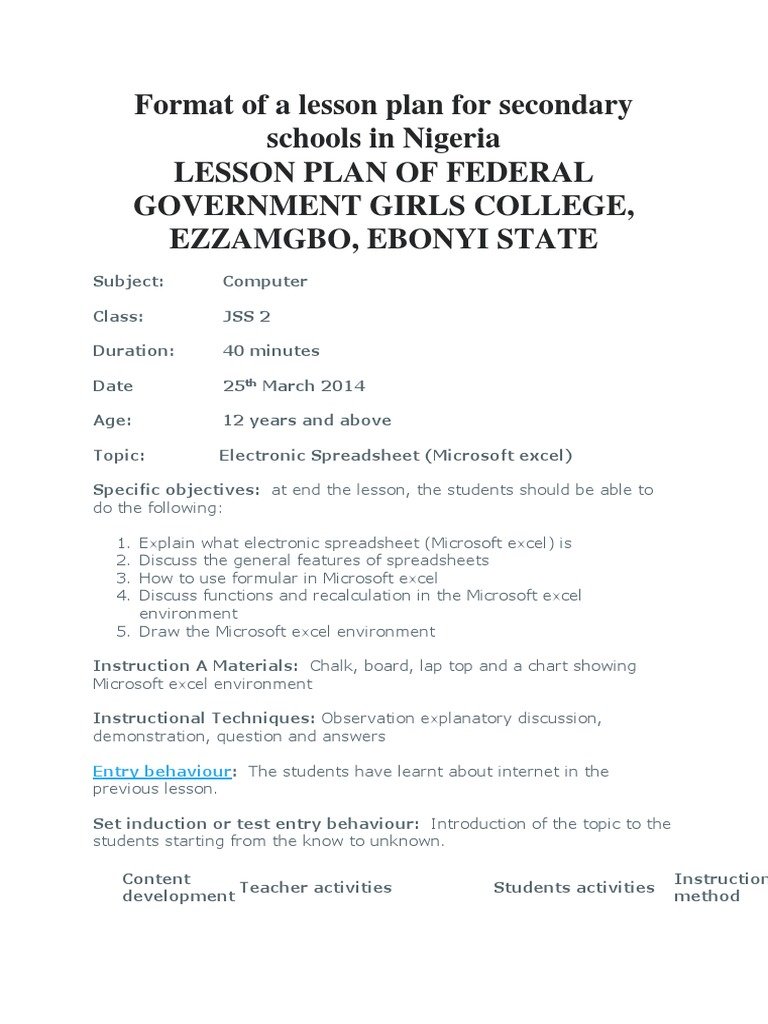
Creating an effective lesson plan format in Nigeria is essential for successful teaching. Starting with clear objectives and incorporating interactive activities can enhance student engagement. Proper alignment with curriculum standards ensures relevance and effectiveness. Utilizing technology and diverse resources can further enrich the learning experience. Tailoring the lesson plan format to cater to the unique needs and backgrounds of Nigerian students is key to fostering a dynamic and inclusive classroom environment.

Understanding the Lesson Plan Format in Nigeria
Welcome to our exploration of lesson plan formats in Nigeria! Teachers play a crucial role in shaping the minds of young learners, and an effective lesson plan is the backbone of successful teaching. In this article, we will delve into the intricacies of lesson plan formats used in Nigerian schools, understanding their importance, components, and how they contribute to a structured learning environment. Let’s embark on this educational journey together!
The Significance of Lesson Plans
Lesson plans are like roadmaps that guide teachers on what to teach, how to teach, and the methods to use in facilitating learning. In Nigeria, where education is highly valued, lesson plans are essential tools that help teachers deliver quality education and achieve learning objectives. A well-structured lesson plan not only benefits the teacher but also enhances the learning experience for students.
Components of a Lesson Plan in Nigeria
Lesson plans in Nigeria typically consist of several key components that are carefully crafted to ensure effective teaching and learning. Let’s break down these components:
1. Lesson Title and Grade Level
Every lesson plan starts with a clear and concise title that indicates the topic of the lesson. Additionally, the grade level for which the lesson is intended is specified to ensure that the content aligns with the students’ academic level.
2. Learning Objectives
Learning objectives outline what students are expected to achieve by the end of the lesson. These objectives are specific, measurable, achievable, relevant, and time-bound (SMART), providing a clear roadmap for both teachers and students.
3. Lesson Duration
The lesson duration specifies the amount of time allocated for each part of the lesson, including introduction, teaching, activities, and assessment. This helps teachers manage time effectively and ensure that all aspects of the lesson are covered within the allotted time frame.
4. Materials and Resources
Teachers list the materials and resources needed for the lesson, such as textbooks, handouts, visuals aids, and technology tools. Ensuring that all required materials are prepared in advance helps facilitate a smooth teaching process.
5. Teaching Methodologies
This section outlines the strategies and approaches that teachers will use to deliver the lesson. In Nigeria, teachers employ a variety of teaching methodologies, including lecture, group work, discussions, and hands-on activities, to cater to different learning styles.
6. Assessment and Evaluation
Assessment criteria are included to measure students’ understanding and mastery of the lesson content. This may involve quizzes, tests, projects, or class participation evaluation. Feedback from assessments helps teachers gauge the effectiveness of their teaching methods.
Creating an Effective Lesson Plan
Now that we have explored the components of a lesson plan in Nigeria, let’s discuss how teachers can create an effective lesson plan that engages students and promotes learning:
1. Understand Your Students
Teachers should consider the academic levels, learning styles, and interests of their students when designing lesson plans. By incorporating students’ backgrounds and preferences, teachers can tailor lessons to maximize engagement and understanding.
2. Set Clear Objectives
Clearly defined learning objectives help students understand what is expected of them and provide a sense of direction. Objectives should be communicated at the beginning of the lesson to set the stage for learning.
3. Incorporate Interactive Activities
Engaging students through interactive activities such as group work, discussions, and hands-on experiments can foster active participation and deeper comprehension. By making lessons interactive, teachers create a dynamic learning environment.
4. Provide Feedback and Encouragement
Feedback is a crucial part of the teaching and learning process. Teachers should provide constructive feedback to students to help them improve and grow. Encouragement and positive reinforcement motivate students to strive for excellence.
Challenges and Innovations in Lesson Planning
While lesson planning is essential for effective teaching, educators in Nigeria often face challenges in creating and implementing lesson plans. Limited resources, large class sizes, and diverse student needs can pose obstacles to seamless lesson delivery. However, teachers are continually innovating and adopting new strategies to overcome these challenges.
Integration of Technology
Technology has become an integral part of education, offering innovative tools and resources that enhance teaching and learning. Teachers in Nigeria are increasingly incorporating technology into their lesson plans to create interactive learning experiences and engage tech-savvy students.
Collaborative Lesson Planning
Collaborative lesson planning allows teachers to work together, share ideas, and create comprehensive lesson plans that benefit from diverse perspectives. By collaborating with colleagues, teachers can leverage collective expertise and creativity to design impactful lessons.
Professional Development
Ongoing professional development plays a vital role in improving lesson planning skills and pedagogical techniques. Attending workshops, training sessions, and conferences equips teachers with the latest teaching strategies and best practices, enabling them to enhance their lesson planning processes.
In conclusion, lesson planning is a fundamental aspect of teaching in Nigeria, providing teachers with a roadmap for delivering effective and engaging lessons. By understanding the components of a lesson plan, creating interactive learning experiences, and embracing innovative approaches, educators can enhance the quality of education and empower students to succeed. Let’s continue to support our teachers in their mission to educate and inspire the next generation of learners!
Thank you for joining us on this exploration of lesson plan formats in Nigeria. We hope you have gained valuable insights into the importance and intricacies of lesson planning in the Nigerian educational system. Stay tuned for more educational content and resources!
Lesson Plan Format and Solved Example | #format #lessonplan #teacher
Frequently Asked Questions
What is the recommended lesson plan format in Nigeria?
In Nigeria, the recommended lesson plan format typically includes sections such as the lesson title, lesson objectives, materials needed, instructional procedure, assessment methods, and notes for reflection and improvement.
How can I structure the objectives section in a lesson plan format in Nigeria?
In the objectives section of a lesson plan in Nigeria, it is important to clearly outline what students are expected to learn or achieve by the end of the lesson. Objectives should be specific, measurable, achievable, relevant, and time-bound (SMART).
What should be included in the instructional procedure of a lesson plan in Nigeria?
The instructional procedure of a lesson plan in Nigeria should outline step-by-step how the lesson will be delivered. It should include activities, teaching strategies, time allocations, and any specific instructions for engaging students effectively.
How important is it to include assessment methods in a lesson plan format in Nigeria?
It is crucial to include assessment methods in a lesson plan format in Nigeria as they help educators to evaluate whether learning objectives have been met. Assessment methods can include quizzes, tests, group projects, presentations, or other forms of evaluation.
Final Thoughts
In conclusion, the lesson plan format in Nigeria plays a crucial role in effective teaching and learning. By following a structured approach, educators can ensure clear objectives, engaging activities, and assessment criteria. Flexibility within the format allows for adaptation to student needs and interests, promoting a dynamic classroom environment. Ultimately, a well-designed lesson plan format in Nigeria can enhance student outcomes and create a more organized teaching experience.